Know Your Agent
Know who is behind every agent
Give agents the ability to autonomously transact on the internet.
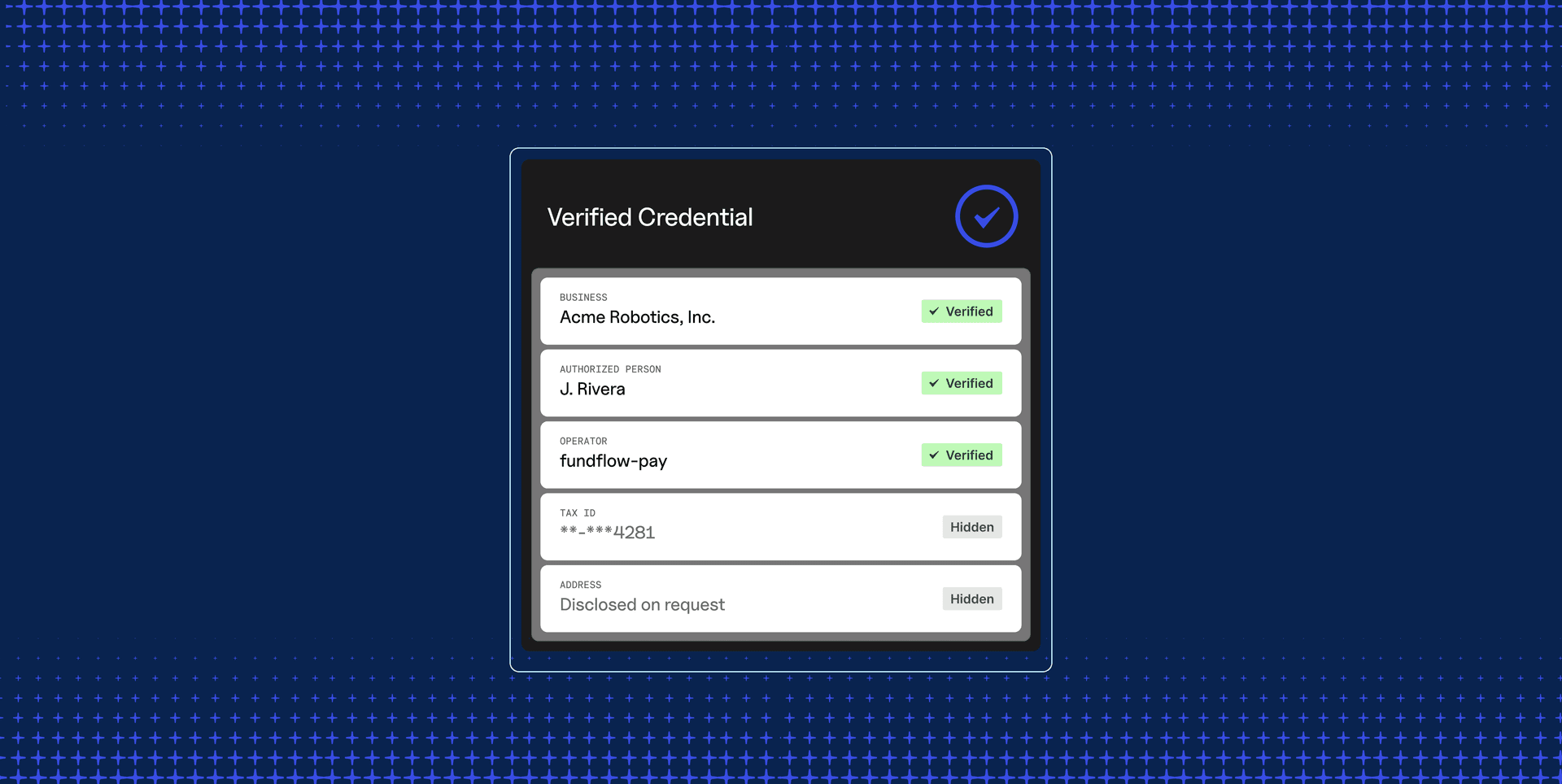
Trusted by developers and industry leaders at 2,300+ financial institutions
When an agent shows up to transact, there’s no way to prove which person or business it represents.
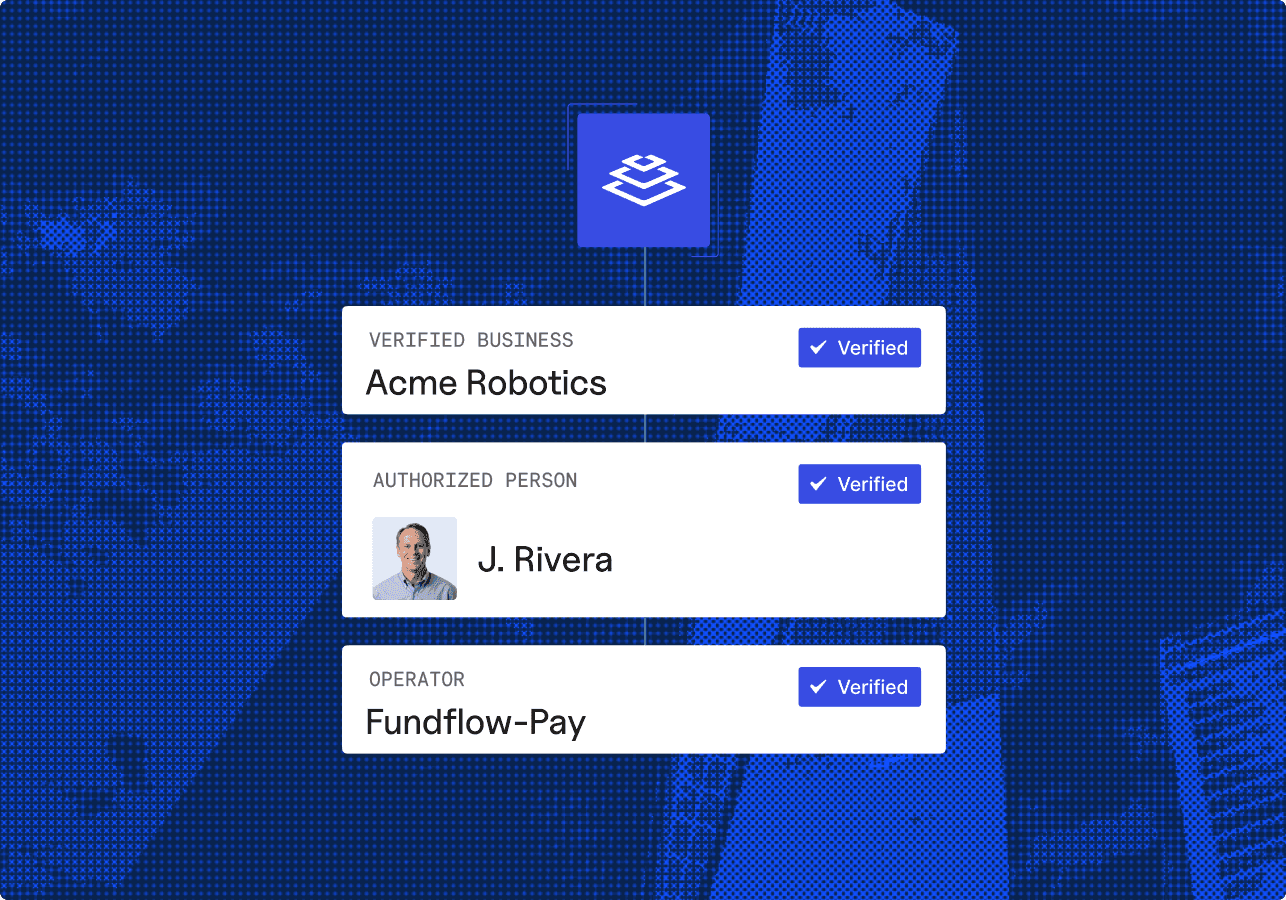
Accept agent traffic without anonymous risk
Know which verified person and business stands behind an agent before you allow it to take action.
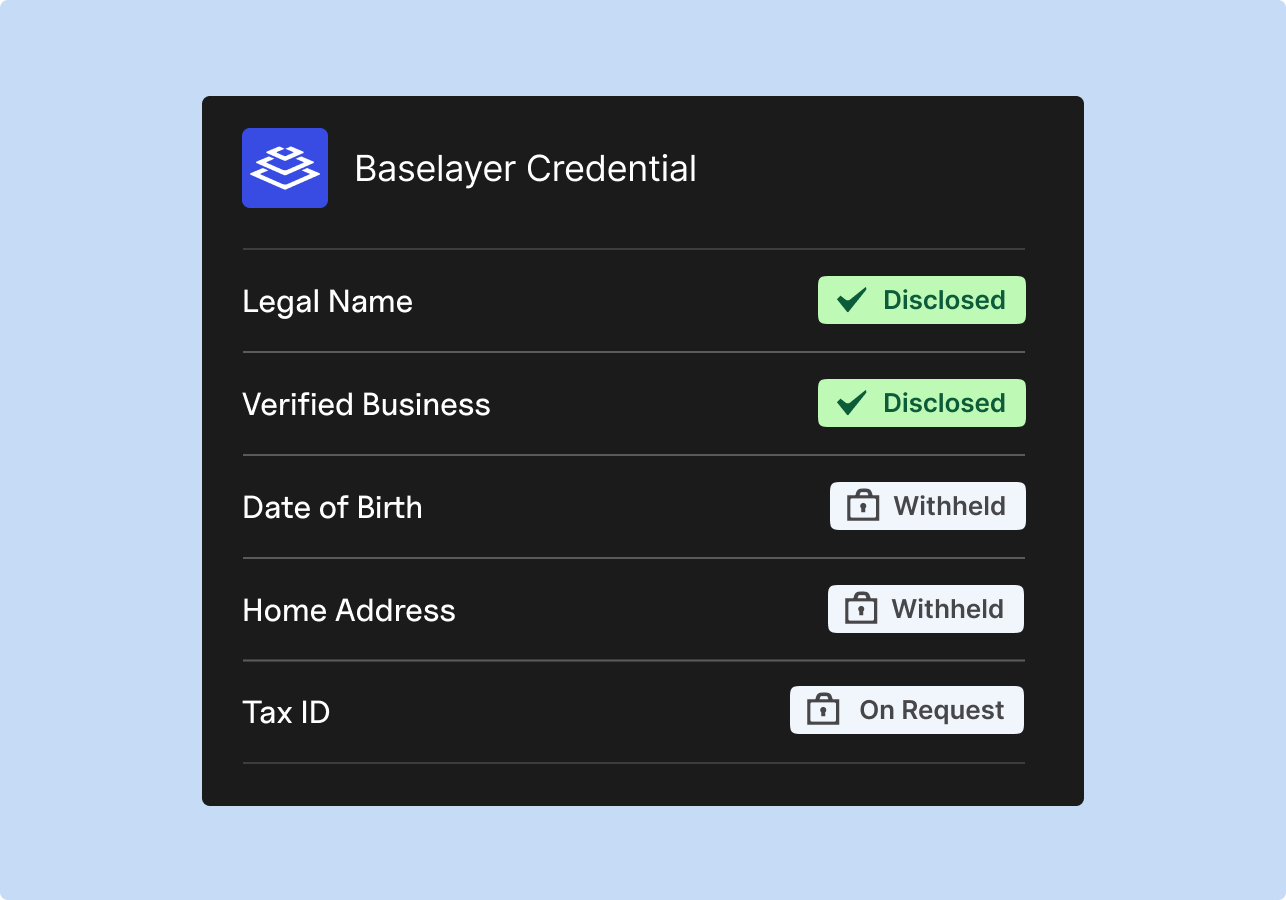
Prove what matters based on the action
Selectively disclose identity and risk attributes required to accept a transaction or enable account access.
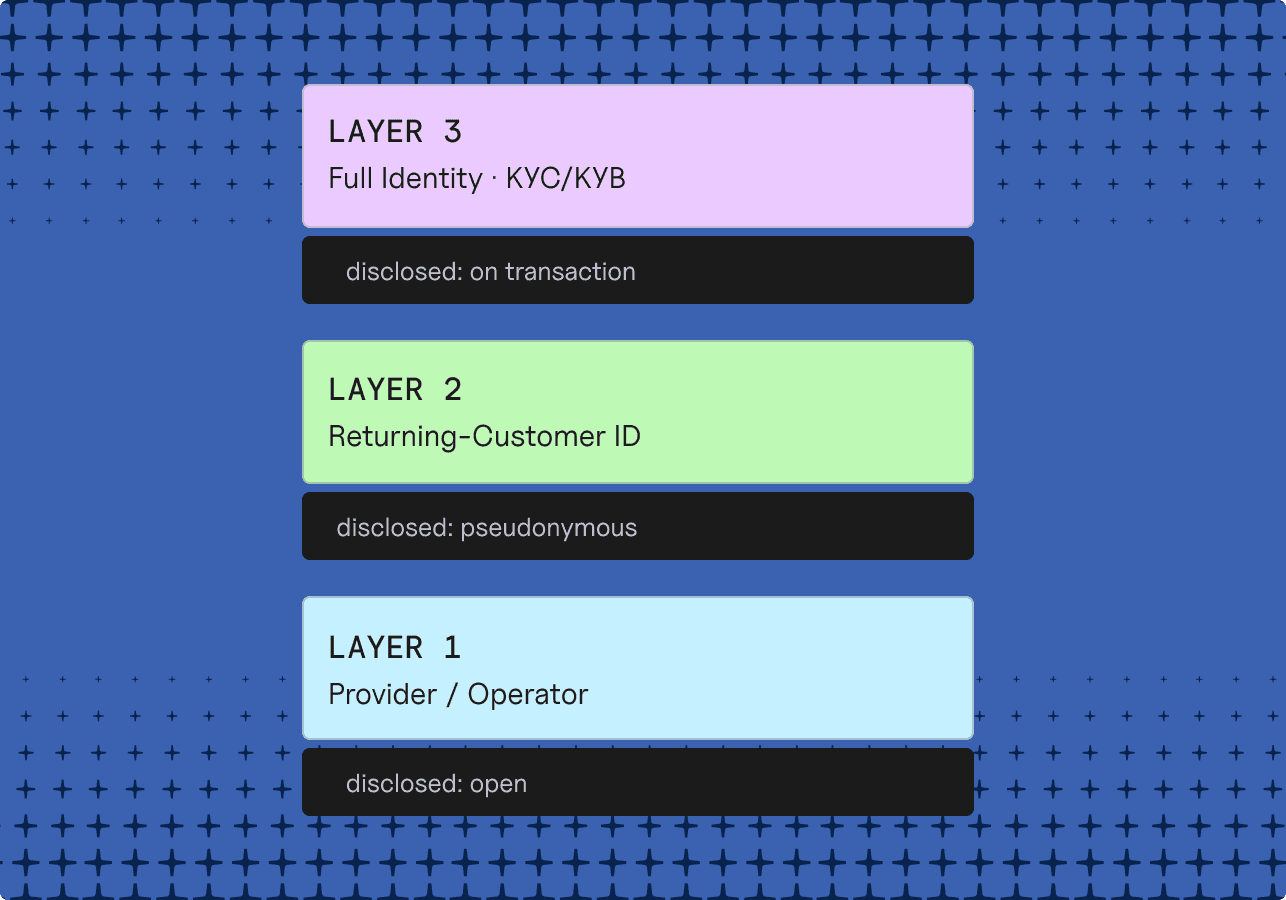
Keep your secrets safe
Let agents prove who they are without handing them reusable passwords or credentials that can be stolen or misused.
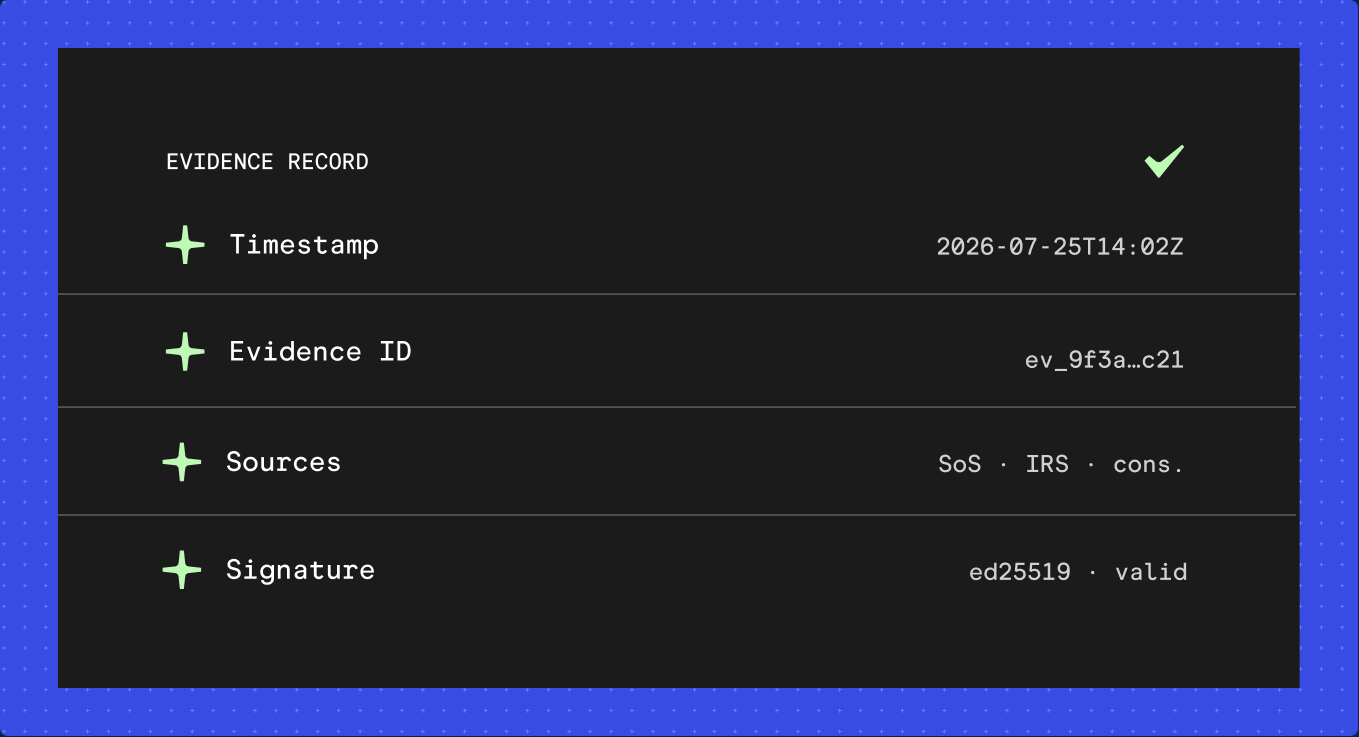
Keep accountability intact
Preserve the identity and delegation behind agent actions, with evidence that outlives the agent session if something goes wrong.
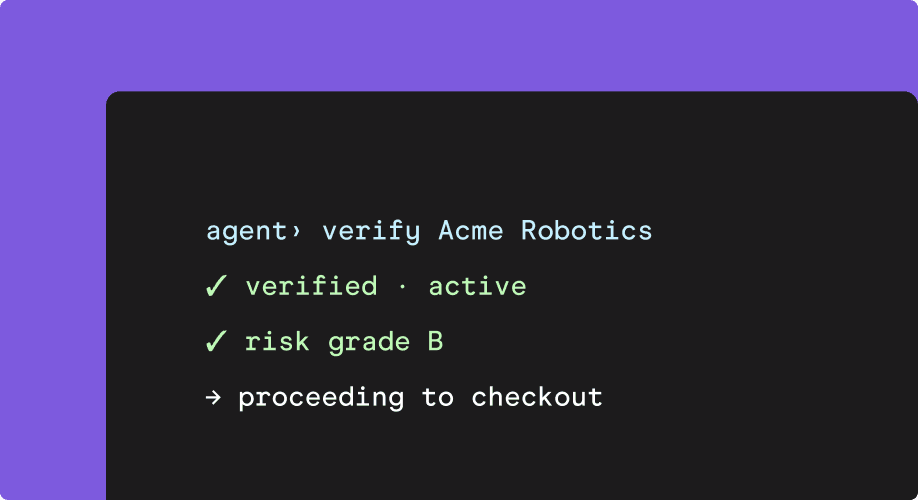
Give an agent portable proof of who it represents.
Interoperable across all payment methods and protocols, with built-in matching to your existing customer identifiers.
Interoperable across all payment methods and protocols, with built-in matching to your existing customer identifiers.
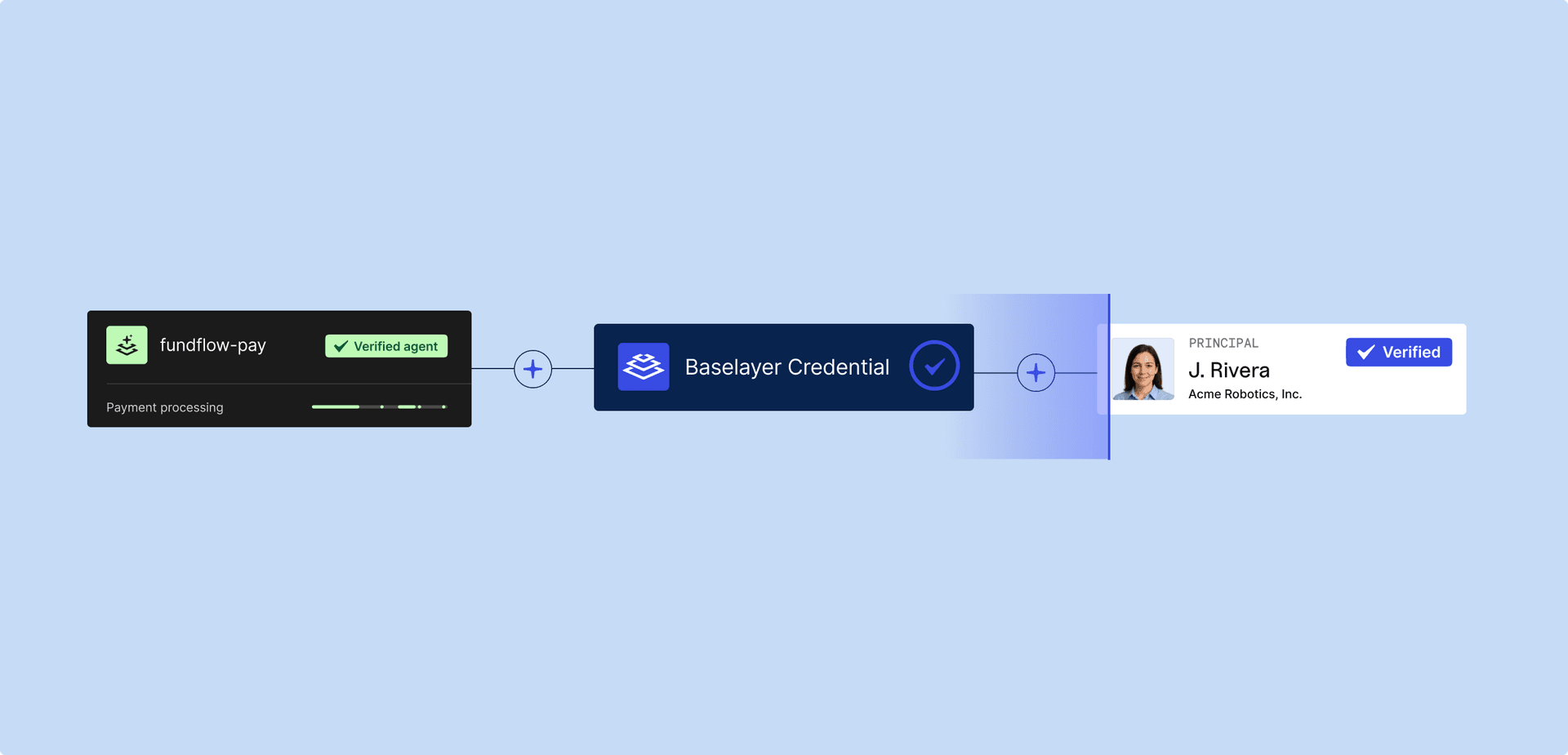
Trust has to work on both sides of the transaction
Merchants & Platforms
Financial Institutions
Payment Processors
Trust that travels with every agent action.
Recognize the returning customer behind an agent across platforms and agent harnesses.


The next generation of financial services will require institutions to make trusted decisions about businesses, people, and AI agents acting on their behalf. FIS is partnering with Baselayer to bring verified identity and risk intelligence into the workflows of the thousands of financial institutions we serve, giving them the confidence to extend trust into digital and agentic channels as transaction patterns evolve.


The world’s data is too great for a single index and agents require best-in-class data sources beyond the public web. Exa Connect is built to make that possible. Bringing Baselayer into the ecosystem gives enterprises and developers access to verified business and risk intelligence alongside the web, so agents can go deeper when the workflow demands it.

Nevermined gives agent builders a way to enable that autonomy with clear spending boundaries. By partnering with Baselayer, we’re pairing that delegated authority with trusted identity, so agents can transact more autonomously without giving up the controls enterprises require.
Part of Baselayer’s Agentic Identity Suite.
Trust that travels with every agent action.
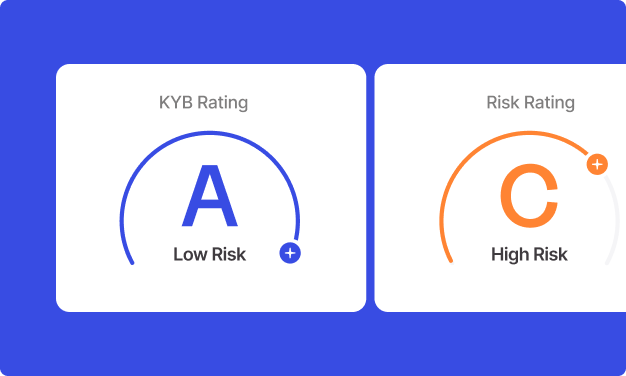
INTELLIGENCE LAYER
Verified business context for agents.
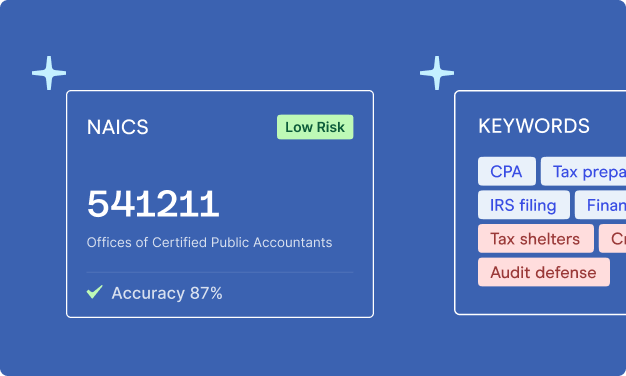
Counterparty Verification
Know who your agent is dealing with.
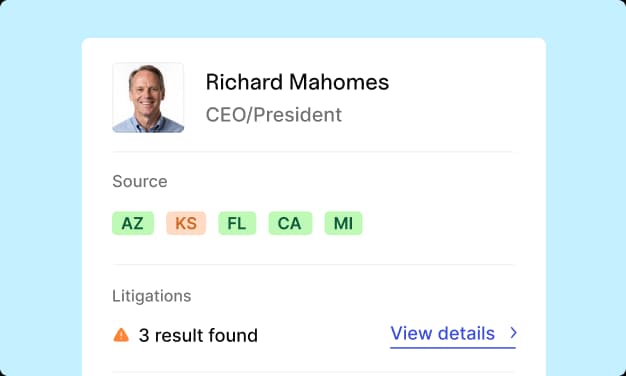
Trusted Registry
Discover trusted participants.
Have questions?
Find answers.
Know Your Agent (KYA) is the process of verifying an AI agent’s identity: which platform runs the agent, which business or person delegated the agent, and whether that delegation can be proven.
KYC and KYB establish the identity of a person or business. Know Your Agent connects that verified real-world identity to the agent acting on its behalf and the authority delegated to it.
KYA solves the trust gap created when an agent initiates a transaction instead of a person. Without KYA, a counterparty can’t tell a legitimate agent from a spoofed or malicious one, and can’t trace an action back to an accountable person. KYA makes agents identifiable so that businesses can accept agent traffic without taking on unbounded fraud and compliance risk, and retain their customer relationships.
Liability follows the chain of delegation, so it can only be assigned if that chain is recorded. Each action should be traceable to a specific agent, the platform that deployed it, and the person or business that authorized it. Baselayer’s role is making that chain verifiable and auditable so liability can flow to the correct party.